



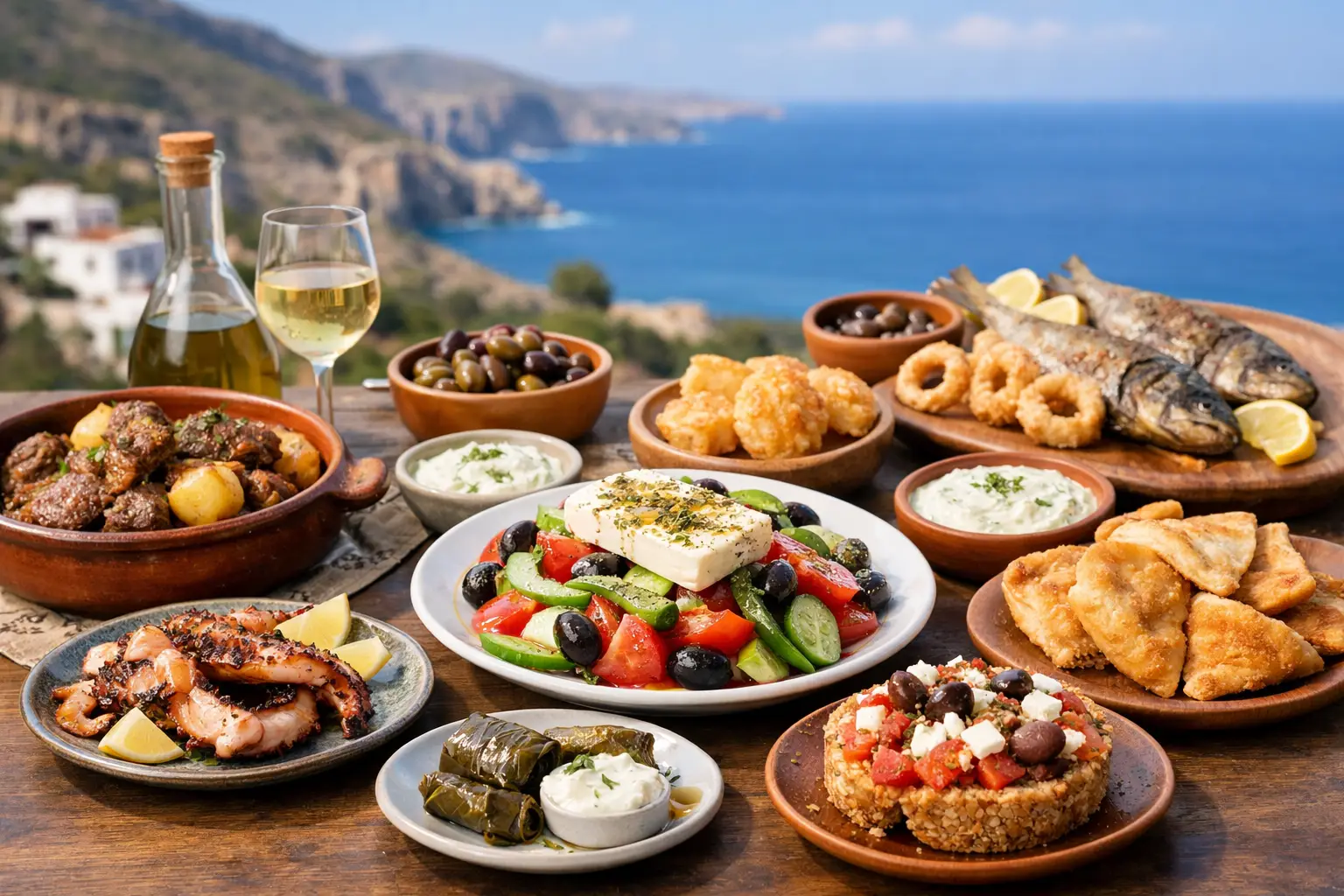


Lunch in Crete rarely feels rushed. A simple taverna table can fill quickly with olive oil, bread, greens, cheese, grilled meat and something slow-cooked that tastes far better than it looks on the menu. If you are searching for the must eat foods in Crete, the best approach is not to chase the fanciest restaurant. It is to know what to order when you stop in a mountain village, a harbor-side taverna or a family-run spot just outside the busy resort roads.
Cretan food has a reputation for being healthy, but that description can make it sound worthy and plain. In reality, it is generous, deeply local and full of character. The island’s cooking leans on excellent olive oil, wild herbs, sheep and goat cheeses, fresh vegetables, pulses and meat cooked with patience. Some dishes are easy to find everywhere. Others appear only in the right region or at the right time of year. That is part of the pleasure.
Table of Contents
Must eat foods in Crete that are worth ordering first
If your time on the island is limited, start with dishes that tell you something specific about Crete rather than standard Greek menu fillers. A Greek salad will always do the job, but Crete has stronger signatures.
Dakos is usually the right place to begin. It is a barley rusk topped with chopped tomato, soft mizithra or feta-like cheese, olive oil and oregano, sometimes with capers or olives. It sounds simple because it is simple, but when the tomatoes are properly ripe and the olive oil is good, it is one of the most satisfying things you can eat in the heat. Texture matters here. The rusk should soften slightly underneath while keeping some bite. If it turns soggy, it has been sitting too long.
Kalitsounia are another classic, and they vary more than many visitors expect. In some places they are small pastries filled with greens or local cheese. In others they are lightly sweet and finished with honey. Both versions are worth trying because they show two sides of Cretan cooking – savoury and practical on one hand, gentle and celebratory on the other. They are often at their best in smaller bakeries and village tavernas rather than heavily touristed seafront menus.
Then there is apaki, a smoked cured pork that carries a distinct herbal flavour, often from sage or other local aromatics. You might find it sliced as a meze, folded into pasta or served with eggs. It is rich, fragrant and more refined than its rustic description suggests. Order it when you want something unmistakably local but not too heavy.
Snails, known as chochlioi, are one of the dishes that separate curious eaters from cautious ones. In Crete they are not a novelty. They are part of the island’s food culture. The best-known version is cooked with rosemary, vinegar and olive oil. If you are unsure, share a plate first. Done well, they are earthy, savoury and surprisingly delicate.
The best meat dishes to try across the island
Crete is not only about salads, cheese and olive oil. Meat dishes are central too, especially inland where mountain cooking shapes the menu.
Antikristo is perhaps the most famous example. This traditional way of roasting lamb involves cooking it slowly around an open fire, usually with very little seasoning beyond salt. It is all about the quality of the meat and the method. When you find a place doing it properly, the flavour is clean and deep rather than heavily spiced. It is not an everyday dish in every taverna, so if you see it on the menu, that is often the moment to order it.
Gamopilafo is another must. This creamy rice dish, traditionally linked with celebrations and weddings, is cooked in a rich meat broth and often finished with a little lemon. It can sound modest on paper, but the best versions have remarkable depth. Think of it as comfort food with ceremony behind it. Some places make it with goat or lamb stock, and quality varies, so ask what style the kitchen serves.
Stifado also deserves attention, especially if you are travelling outside the hottest part of summer. This slow-cooked stew, usually made with beef or rabbit, combines onions, tomato, wine and warming spices. It is not unique to Crete, but Cretan tavernas often do it exceptionally well. It suits an evening meal after a long drive through the interior, when you want something substantial and unhurried.
You may also come across goat, often simply roasted or braised. On an island with strong pastoral traditions, goat is not treated as a specialist item. It is part of ordinary local eating. If you enjoy robust flavours, choose it over more familiar chicken or pork.
Local cheeses, greens and simple plates with real character
Some of the must eat foods in Crete are not headline dishes at all. They are the plates that arrive almost casually and end up being the most memorable.
Ask for local cheeses whenever they are available. Graviera is the best known – firm, nutty and versatile, excellent on its own or lightly fried. Mizithra is softer and fresher, often used in pastries or salads. Anthotyro can be mild and creamy. The point is not to order every cheese plate you see, but to notice how often local dairy appears in different forms across the island.
Greens are another quiet strength of Cretan cooking. Horta, a plate of boiled wild greens dressed with olive oil and lemon, may not look dramatic, yet it captures the island’s approach to food better than many heavier dishes. It relies on freshness, restraint and confidence in ingredients. The same goes for courgette flowers, artichokes when in season and simple beans or chickpeas cooked well.
If you see ntakos listed instead of dakos, do not overthink the spelling. Menus vary. What matters is the quality of the components. Equally, a dish described as village pie, local pie or cheese pie may be a version of something deeply Cretan rather than a generic snack. It is worth asking.
What to drink and what to leave room for
Food in Crete is rarely separate from drink. House wine can be very good, especially in traditional tavernas that serve local production rather than branded bottles by default. Raki, or tsikoudia, often appears at the end of the meal whether you planned for it or not. It is part hospitality, part punctuation mark. Sip it slowly.
For dessert, keep expectations flexible. You may order a pudding and still be given fruit, yoghurt or a small sweet on the house. That generosity is part of the dining rhythm. If you are choosing deliberately, look for yoghurt with thyme honey, xerotigana if available, or sweet kalitsounia. None is overly elaborate, and that is the point.
How to find the best food while travelling around Crete
The best meals on the island are not always where the best view is. Waterfront tables can be excellent, but they can also lean heavily on convenience. A short drive inland often changes the quality of the menu immediately. In places where locals eat regularly, you are more likely to find seasonal cooking, regional specialities and dishes made because people still want to eat them, not because visitors expect them.
This is where having your own transport changes the experience. You can have lunch in a mountain village, stop for cheese pies at a bakery you would otherwise pass, or choose a quiet taverna outside the busiest stretch of the resort. For travellers who want to eat well without planning every meal around bus times or taxi availability, that flexibility matters. A reliable car gives you the freedom to follow recommendations properly rather than settling for the nearest option, which is often how the best Cretan meals happen.
One practical note: menus can be inconsistent in translation. A dish may sound plain in English and be excellent on the plate. Another may read impressively and turn out ordinary. Asking what is cooked today, what is local or what the house recommends usually gets better results than choosing by description alone.
Crete rewards a calm appetite. Order the local cheese, try the dish you cannot pronounce, take the road into the hills for lunch, and leave room for whatever arrives at the end of the meal without asking. That is usually where the island gets it right.