



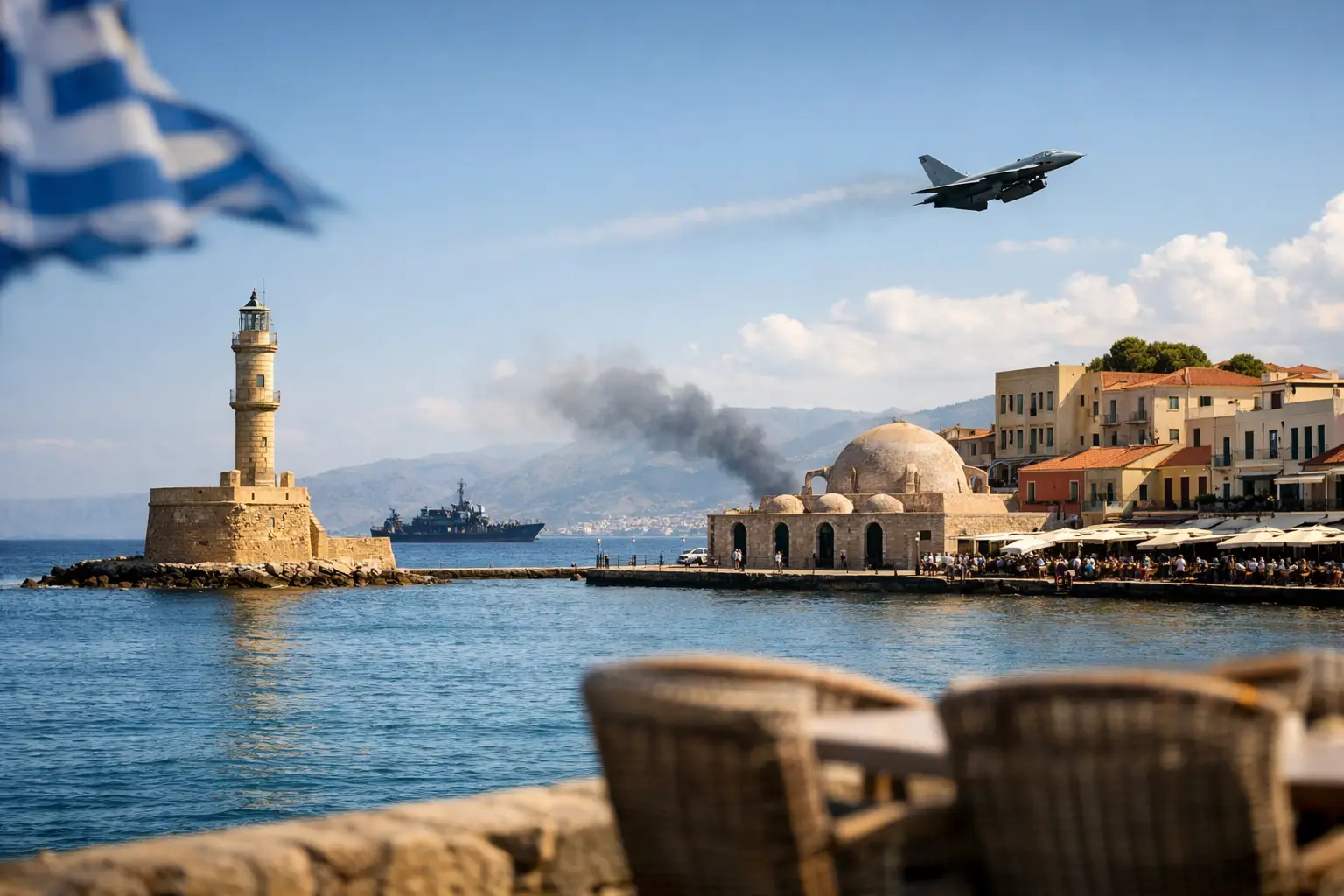


If you are asking is Crete safe during the Iran war, you are not overreacting. When headlines mention conflict in the wider region, even travellers with long-planned holidays start checking maps, flights and local advice more carefully. That is sensible. It is also where perspective matters, because Crete is often discussed as if it sits at the centre of every Eastern Mediterranean event, when the on-the-ground reality is usually far more stable.
Table of Contents
Is Crete safe during the Iran war for holidaymakers?
For most visitors, Crete remains a functioning, well-established holiday destination with normal daily life across its resorts, towns and road network. Hotels operate as usual, beaches stay busy, restaurants open, and airport arrivals continue unless specific aviation or government restrictions say otherwise. In practical terms, the main concerns for travellers are usually not direct danger on the island but knock-on effects such as flight disruption, heightened airport security, insurance conditions and anxiety caused by fast-moving news coverage.
That distinction is important. There is a difference between being near a region affected by tension and being in an active danger zone. Crete is part of Greece, an EU country with mature tourism infrastructure, established emergency services and a large international visitor base. For British travellers, that means a destination where practical travel systems are familiar and generally dependable.
What the risk actually looks like
The phrase “Iran war” can mean different things depending on the moment. It might refer to direct conflict involving Iran, retaliatory strikes, regional escalation, naval tension, or broader instability affecting neighbouring countries. Your safety assessment should therefore focus less on dramatic wording and more on three real questions: what is happening geographically, are authorities changing travel advice, and is transport operating normally?
On the island itself, the most likely experience for a tourist is no visible sign of conflict at all. You are far more likely to notice the usual holiday logistics – transfer times, road conditions in mountain areas, busy parking near popular beaches, and whether you have booked the right car for your route – than any immediate security issue tied to events elsewhere.
That said, regional instability can still matter indirectly. Airspace changes can affect flight paths. Security checks may take longer. Some travellers may feel uneasy if they are not comfortable being in the Eastern Mediterranean during a tense period, even if the local risk remains low. Feeling safe and being safe are related, but they are not the same thing.
Geography matters more than headlines
Crete is Greece’s largest island, sitting in the southern Aegean. On a news map, the Eastern Mediterranean can look compressed, making separate countries and conflict zones seem closer and more connected than they feel in real travel terms. That visual effect can make risk appear more immediate than it is.
For holidaymakers staying in Heraklion, Hersonissos, Agios Nikolaos, Chania or the south coast, daily conditions are defined by local infrastructure, weather, transport services and tourism operations. If there were any genuine direct threat to visitors in Crete, it would be reflected quickly in official travel advice, airline decisions and tourism operations. Those are the signals worth watching, not social media clips with no date or location.
What British travellers should check before flying
If you want a clear answer to is Crete safe during the Iran war, the best approach is practical rather than emotional. Check official UK travel advice for Greece, confirm your airline is operating as scheduled, and read your travel insurance wording carefully. Those three steps tell you far more than rolling television coverage.
Travel insurance deserves special attention. Some policies cover disruption but not cancellation due to concern alone. Others may change terms if a destination becomes subject to a specific government advisory. If your flight and accommodation are running normally, and official advice does not warn against travel, your policy may treat your trip as proceeding as planned.
It is also worth checking airport timings. During periods of regional tension, airports may add extra screening or simply move more slowly because passengers are asking more questions and staff are handling schedule adjustments. Arriving a little earlier gives you breathing room.
On-island safety in Crete is usually about normal travel sense
For most visitors, the bigger day-to-day safety issues in Crete are the ordinary ones. Summer heat can be intense, rural roads require care, and long scenic drives can be more tiring than they look on a map. Families with children, couples planning beach-hopping days and groups moving between resorts are usually best served by thinking about comfort, timing and route planning first.
A reliable car can make that much easier. Crete rewards independent travel because many excellent beaches, villages and viewpoints are awkward to reach on fixed timetables. But this is where convenience and reassurance matter. During any period of wider uncertainty, most travellers feel better when the simple parts of the journey work exactly as expected – the booked vehicle is the vehicle provided, pick-up is straightforward, and support is available if plans change.
That is one reason many visitors prefer a more service-led local provider such as Autochoice rather than an impersonal queue-and-counter experience. When the broader news cycle feels noisy, direct and dependable local service becomes more valuable.
Is Crete safe during the Iran war if the conflict escalates?
This is where nuance matters. If a conflict involving Iran were to escalate significantly, the first effects for Crete-bound travellers would still most likely be operational rather than local physical danger. Think flight rerouting, timetable changes, extra security measures, or updated government advice. A major shift in regional conditions could change the picture, but that would not happen silently. It would trigger visible responses from airlines, tour operators, embassies and Greek authorities.
In other words, the answer is not “nothing could ever change”. It is that changes, if they come, would usually be signposted through the systems travellers already use. That makes the situation manageable. You do not need to predict geopolitics on your own. You need to monitor trusted sources and keep your plans flexible.
Practical signs that your trip is still on track
If flights are operating, hotels are open, local transport is running and official advice has not materially changed, that is usually a strong indication that travel to Crete remains viable. You can also look at whether ferry routes, airport transfers and resort services are functioning normally. Holiday destinations do not hide disruption very well. If there is a serious problem, it tends to show up quickly in cancellations, notices and service interruptions.
By contrast, if the concern is mostly driven by unsettling headlines without any corresponding change to actual travel operations, the real-world risk to your trip may be lower than you fear.
How to travel more confidently right now
A calm, well-organised plan goes a long way. Keep digital and printed copies of your travel documents. Save your airline booking reference somewhere easy to access. Make sure your mobile phone can receive updates while abroad. If you are hiring a car, choose collection and return arrangements that reduce friction, especially if you are arriving late or travelling with children.
It also helps to avoid overcomplicating your itinerary. If the wider region feels tense, many travellers enjoy Crete more by choosing fewer bases, shorter driving days and accommodation with easy parking. The island offers enough variety that you do not need to race from end to end to feel you have seen it properly.
A balanced answer for cautious travellers
So, is Crete safe during the Iran war? In most realistic scenarios affecting current holiday decisions, yes – Crete is generally considered safe for travellers, and daily life on the island remains normal unless official guidance, transport operations or local authorities indicate otherwise. The more likely risks are travel disruption and uncertainty, not direct exposure to conflict.
That does not mean dismissing concern. It means placing it in the right category. If you are a cautious traveller, the sensible response is to book flexibly where possible, watch official updates, allow extra time at airports and keep your on-island plans simple and comfortable.
A well-run holiday in Crete should still feel exactly what it ought to feel like: easy to navigate, welcoming on arrival, and full of the freedom that comes with moving around the island on your own terms. When the news is loud, clarity is valuable – and the best decision is usually the one based on facts, not fear.
If you are still unsure, give yourself one final test: look at the current travel advice, your flight status and your insurance wording on the same day. Those three answers will tell you far more than any headline ever will.