



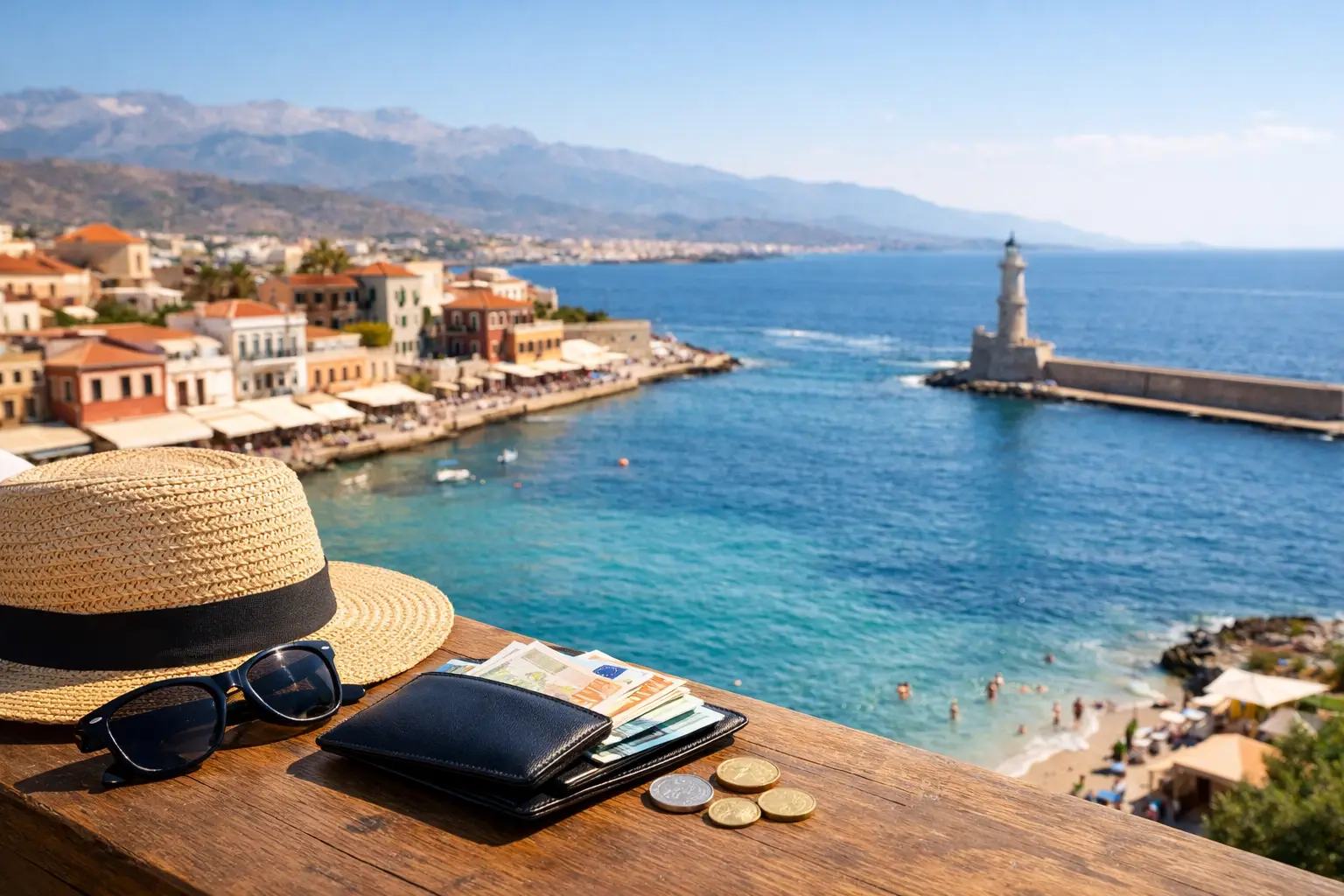


Landing in Crete and paying €4 for a strong coffee by the sea can make the island feel surprisingly affordable. Paying peak-season rates for a waterfront suite in August can make it feel decidedly less so. So, is Crete expensive to visit? For most travellers, the honest answer is no – but it can become expensive quickly if you choose the wrong season, the wrong base, or the wrong way to get around.
Crete sits in a useful middle ground. It is not the cheapest Greek destination in every category, but it offers far more range than many smaller islands. That matters because it gives you control. You can plan a relaxed, good-value holiday with excellent food, comfortable accommodation and memorable day trips without spending at luxury-island levels. At the same time, Crete can easily deliver a more premium stay if comfort, privacy and flexibility are part of the experience you want.
Table of Contents
Is Crete expensive to visit compared with other Greek islands?
Compared with headline-name islands such as Santorini or Mykonos, Crete usually feels much better value. Accommodation tends to be broader in price, tavernas are often more reasonably priced, and the island’s sheer size creates more competition across hotels, restaurants and activities. You are not limited to one compact, high-demand area where every meal and taxi ride carries a premium.
Compared with some lesser-known mainland destinations or very quiet islands, Crete may look slightly dearer in popular resort zones, especially in high summer. Places such as Elounda, parts of Chania, and premium coastal resorts cater to travellers who expect a polished stay and are willing to pay for it. That does not make Crete expensive overall. It means the island has layers. Your costs depend heavily on where you stay and how you move.
For British travellers, Crete often represents strong value because it combines beaches, mountain villages, historic towns, family-friendly resorts and road-trip potential in one destination. You can spend more here, but you are usually getting more choice and flexibility in return.
What you can expect to spend in Crete
Accommodation is where budgets can shift most dramatically. A simple room or modest studio outside the most sought-after beachfront spots can be very good value, particularly in shoulder season. Mid-range hotels often offer a comfortable sweet spot, with better service, cleaner facilities and stronger locations without stepping into luxury pricing. Once you move into boutique properties, private pools, sea-view suites and five-star resorts, costs rise quickly, especially from late June through August.
Food is one of Crete’s strengths, and it is also one of the easier categories to manage well. A casual bakery breakfast, a relaxed lunch in a village taverna, or grilled fish by the harbour can all feel fair for the quality you receive. Tourist-heavy strips tend to charge more, and menus with a perfect sunset view usually know it. Even so, Crete is often kinder on the wallet than destinations where dining is consistently priced for short-stay international tourism.
Drinks and extras are where holiday spending quietly builds. Cocktails in stylish beach bars, sunbeds in premium locations and frequent stops for snacks, ice creams and bottled water all add up. None of these costs are shocking on their own, but they can reshape your daily budget if you have not accounted for them.
Activities vary. Many of the island’s pleasures are low-cost by nature – beaches, scenic drives, old towns, local food and village wandering. Organised boat trips, guided excursions and high-demand attractions naturally push the budget higher. If your ideal trip centres on swimming, eating well and exploring independently, Crete is usually quite manageable.
Transport is often the real budget question
On a smaller island, transport can be a minor detail. In Crete, it is central to cost, convenience and the quality of your trip. Distances are longer than many first-time visitors expect. Beautiful beaches, mountain routes, archaeological sites and resort towns are spread out, which means your transport choice affects not only what you spend, but how much of the island you actually enjoy.
Public buses can be economical and work well on certain routes, particularly between major towns. They are less ideal if you want to visit remote beaches, move on your own schedule or avoid losing precious holiday time to connections and waiting. Taxis are convenient for short hops, airport runs or an occasional evening out, but they become expensive if used repeatedly for sightseeing or day-to-day travel.
That is why car hire often provides the best balance of value and comfort in Crete. It gives you cost control, especially if you are travelling as a couple, family or group, and it lets you avoid paying separately for multiple transfers, organised excursions and inflexible transport plans. More importantly, it makes the island feel easier. You can leave early for a beach, stop in a mountain village for lunch, return on your own time and carry everything you need without compromise.
For travellers who want a smoother experience, a reliable local provider with transparent terms can make a noticeable difference. Having the exact vehicle you booked, clear insurance options and delivery to the airport, hotel or resort area removes the kind of friction that can turn a supposedly cheap option into an inconvenient one.
When Crete feels expensive
Crete feels most expensive in peak summer, particularly in August. Flights are higher, hotel availability tightens, and better-located properties command a clear premium. Popular beach clubs, busy harbour restaurants and high-demand resorts also push average spending upward.
It can also feel expensive if you stay in one of the island’s most polished resort areas and rely on taxis for everything. That combination tends to produce the highest spend with the least flexibility. You pay premium accommodation rates, then premium transport costs on top.
Another common issue is underestimating the island’s size. Travellers sometimes choose a base because it looks attractive online, only to discover that the places they most want to visit are much farther away than expected. That can lead to extra transfers, rushed days or the need to rebook plans at short notice.
When Crete feels like very good value
Crete often feels like excellent value in May, June, September and early October. The weather is usually still very pleasant, the island is easier to enjoy, and prices are generally more reasonable than at the height of summer. You get more space, more choice and often a better standard of stay for the same budget.
It also feels good value when you build your trip around local strengths rather than imported luxury. Eat in well-regarded tavernas instead of chasing the most photogenic restaurant every night. Choose a comfortable hotel in a smart location rather than paying solely for a fashionable postcode. Plan independent days out instead of stacking your itinerary with organised tours.
And if you want to see more than one beach or town, organise transport in a way that matches the island properly. This is where visitors often save both money and stress. A well-chosen rental car can turn Crete from a place of isolated hotel stays into a full island experience. For many guests, that is where the real value lies.
Smart ways to keep costs under control
The simplest savings come from timing and planning. Travelling just outside the busiest weeks can reduce costs across flights and accommodation without sacrificing much in weather. Booking early helps if you want better hotel choice or a specific type of vehicle during busy periods.
Where you stay matters almost as much as when you go. A charming base slightly outside the most expensive waterfront stretch can offer better rates and a calmer atmosphere, while still keeping beaches, restaurants and day trips within easy reach.
Be selective with splurges. Crete rewards a mix of everyday simplicity and a few elevated moments. A scenic dinner, a special hotel night or a cabrio for part of the trip can feel worth it when balanced with quieter local meals and self-planned days.
If mobility is part of your holiday style, think in total-trip terms rather than only the headline daily rate. A car that suits your group properly, with straightforward collection and reliable support, often protects both your time and your budget better than patching together transfers. That is one reason many travellers choose a service-focused local company such as Autochoice when they want to explore in comfort without unnecessary complication.
So, is Crete expensive to visit?
For most visitors, Crete is not expensive in the way people often fear. It is better described as flexible. You can do Crete on a sensible budget, you can enjoy it in a premium way, and you can move between the two depending on what matters most to you.
If your goal is maximum luxury in peak season, expect to pay for it. If your goal is a well-planned holiday with excellent food, varied landscapes, comfortable accommodation and the freedom to see the island properly, Crete is usually very good value.
The best trips here are rarely about spending the least. They are about spending wisely enough to enjoy the island with ease.