



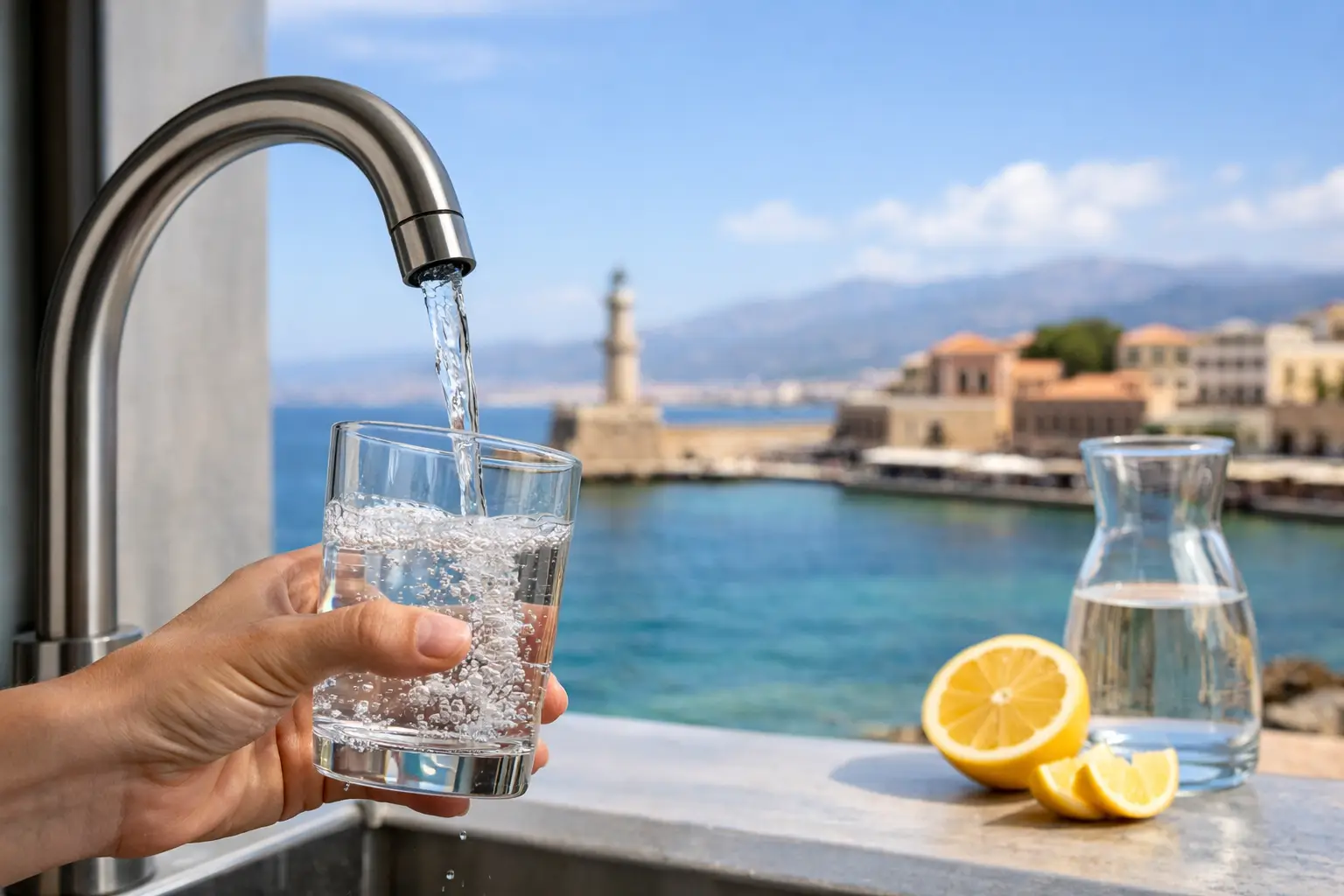
You have landed in Crete, picked up your car, checked into your hotel, and the first practical question arrives fast – can you drink tap water in Crete? The short answer is usually yes, but not always with the same confidence in every area. For most travellers, the issue is less about safety in a strict sense and more about taste, local infrastructure, and how sensitive your stomach is during a trip.
Crete is a large island, and that matters. Water quality can vary between cities, villages, mountain areas, coastal resorts, and smaller islands connected to the wider region. If you are staying in Heraklion or another main town, tap water is generally treated and considered safe to drink. In some resort areas or smaller places, however, locals and hotels may still recommend bottled water, often because the taste is unpleasant or the mineral content is high rather than because the water is dangerous.
Can you drink tap water in Crete in most tourist areas?
In the main urban parts of Crete, including Heraklion, Chania, Rethymno and Agios Nikolaos, tap water is usually potable. Municipal systems treat the water, and many residents use it for cooking, washing vegetables, making tea and, in many cases, drinking. If your accommodation says the tap water is fine, that advice is normally reliable.
That said, travellers often notice that the taste is different from what they are used to in the UK. In some places it can taste strongly chlorinated. In others, it may have a mineral-heavy or slightly brackish character. This does not automatically mean there is a problem. It simply reflects local water sources, summer demand, and the way water is stored and distributed across an island with varied terrain.
If you are staying in a hotel, villa, or flat, ask one direct question at check-in: “Do you recommend drinking the tap water here?” That usually gets a practical answer very quickly.
Why the answer depends on where you stay
Crete is not one uniform water network. Large towns have more consistent municipal treatment, while some smaller villages and tourist developments may rely on different local systems, storage tanks, or water transported under seasonal pressure. During the busiest months, demand rises sharply. A coastal area full of summer visitors does not always have the same water profile as a residential city neighbourhood.
There is also a difference between water being officially safe and water being pleasant to drink every day. Many locals choose bottled water for flavour alone. Others use filtered water at home. So if someone tells you, “We do not drink from the tap,” it may reflect preference rather than a health warning.
Accommodation type matters too. Even where municipal water is good, an older building with neglected internal pipes or a rooftop tank can affect taste and quality. A well-run hotel will usually be transparent about this. If the property routinely provides bottled water on arrival and suggests refilling elsewhere, that is worth noting.
What travellers should watch for
If the tap water is clear, odour-free, and your hotel or host says it is drinkable, most visitors will have no issue using it. But there are a few situations where caution makes sense.
If you arrive at a remote villa, a mountain hamlet, or a very small resort and the water has a strong smell, unusual colour, or cloudy appearance, do not drink it until you ask. If the property uses a private tank, the answer may be different from the nearest town. Equally, if there has been recent maintenance work or a local supply interruption, bottled water is the easier option for a day or two.
Families with babies, older travellers, and anyone with a sensitive stomach often prefer to avoid even small risks on holiday. That is reasonable. A short stay is not the moment to test your tolerance for unfamiliar water, especially if you have a full driving day, a boat trip, or a beach afternoon planned.
Is bottled water a better choice?
For many visitors, bottled water is simply the more convenient choice in Crete. It is widely available, affordable, and easy to pick up from supermarkets, kiosks, bakeries and petrol stations. If you are driving around the island, keeping a few bottles in the car is practical, particularly in summer when heat and dehydration become the bigger concern.
The trade-off is obvious – bottled water creates more plastic waste and adds another small cost throughout your trip. If you prefer to reduce waste, a reusable bottle paired with filtered or confirmed drinkable tap water is the better route. Some travellers buy large bottles for the hotel room and use a refillable bottle during the day.
There is no single right answer here. If you are only in Crete for a week and want complete simplicity, bottled water is common and easy. If you are staying longer, self-catering, or moving around the island, checking local advice and using tap water where appropriate can be more efficient.
Can you drink tap water in Crete when driving around the island?
If you are exploring properly rather than staying in one resort, the answer becomes more situational. You might start the morning in Heraklion, stop in a mountain village for lunch, and end the day at a hotel on the south coast. In that kind of itinerary, it is sensible not to assume every tap is equal.
A good rule is to treat city accommodation and reputable hotels as lower-risk settings, and very remote stops as places where you should ask first. Cafés and tavernas will happily serve bottled water, and many do so automatically. If you fill your bottle before setting off each day, you avoid having to make constant judgement calls on the road.
This is especially useful in peak summer. Crete can be intensely hot, and hydration matters more than debating whether one glass from a village tap is probably fine. When people feel unwell while travelling, heat, sun exposure and dehydration are often the real issue.
Tap water for brushing teeth, tea and cooking
Even travellers who avoid drinking it straight often use tap water in other ways. In most places across Crete, brushing your teeth with tap water is not an issue. Using it for showering, washing fruit, boiling pasta or making tea is also typically normal, especially in towns and established tourist areas.
If you are being extra cautious, the highest-value switch is simply to use bottled or filtered water for drinking. You do not usually need to treat tap water as though it is unusable for everything else. Again, local guidance at your accommodation should settle the matter quickly.
For coffee lovers and self-catering travellers, taste can be the deciding factor. Even safe tap water can alter the flavour of tea and coffee. If that matters to you, bottled or filtered water may be worth it for comfort alone.
How to make the right call when you arrive
The easiest approach is practical rather than dramatic. Check with your hotel, villa host or flat manager. Look at the water itself. Trust clear local advice over rumours from travel forums. If the answer sounds hesitant, just buy bottled water and move on with your day.
If you have collected your car and are heading straight to your accommodation, it is worth picking up water on the way, especially for late arrivals. That gives you flexibility until you know the local setup. Premium travel is often about removing small frictions before they become annoyances, and this is one of them.
When you are touring the island, keep water in the car, particularly if you are travelling with children or planning beach stops between towns. A comfortable, well-organised day in Crete depends as much on small practical decisions as it does on the route itself.
The bottom line for most visitors
So, can you drink tap water in Crete? In many parts of the island, yes. In the main towns and plenty of well-served tourist areas, it is generally safe. But because water quality, taste and local infrastructure vary, bottled water remains the preferred choice for many travellers, especially outside the major urban centres.
If you want the most dependable approach, ask locally, use tap water where it is clearly recommended, and keep bottled water handy for road trips and remote stays. Crete is best enjoyed with confidence and ease, whether you are settling into a city hotel or setting off on your next coastal drive. A little preparation goes a long way towards making the whole journey feel lighter.